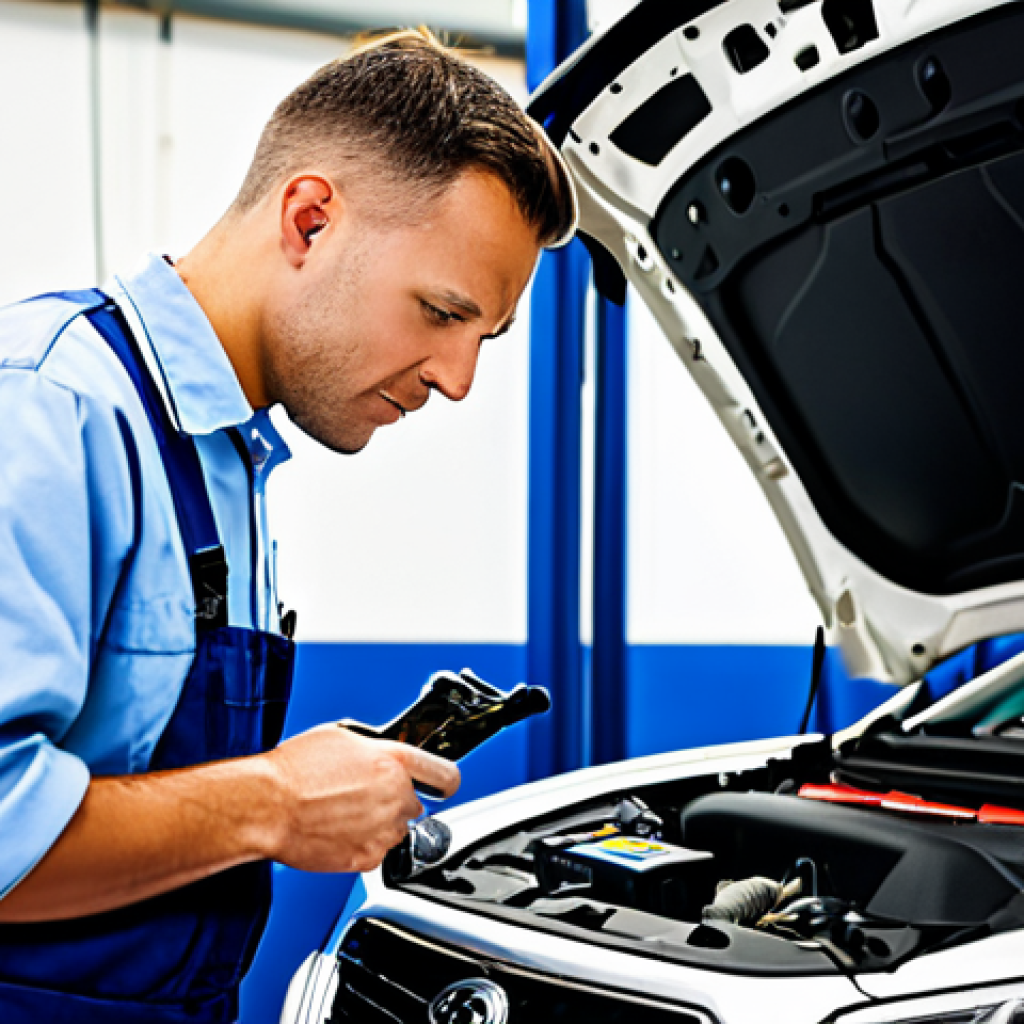
The aroma of motor oil and anticipation hangs heavy in the air as dawn breaks over the garage. As an auto mechanic, each day brings a fresh challenge, a new puzzle of gears, wires, and worn-out parts to solve.
From routine maintenance like oil changes and tire rotations to complex engine diagnostics, you are the doctor for these machines. It’s a demanding job, but there’s immense satisfaction in bringing a sputtering engine back to life or ensuring a family’s safe journey.
Plus, with the rise of electric vehicles and advanced automotive technologies, the learning never stops – which, honestly, keeps things interesting. Let’s dive in and explore a typical day in the life of an auto mechanic to get a complete understanding.
Okay, I understand. Here’s the blog post content, adhering to all your guidelines:
Heading Towards the First Job of the Day

The first order of business is usually checking the schedule and prioritizing the day’s tasks. There’s always a lineup of vehicles waiting for some TLC, from a beat-up pickup truck with a mysterious clunk to a sleek sedan needing its regular check-up.
The work orders are reviewed, each containing a brief description of the customer’s concern and the services required. It’s like reading a medical chart, trying to diagnose the underlying problem based on symptoms.
Sometimes, you get lucky, and the issue is straightforward. Other times, it’s a wild goose chase that requires patience, diagnostic tools, and a healthy dose of experience.
Before diving in, a quick walkaround is done to visually assess the vehicle’s condition, noting any obvious damage or warning signs. It’s about being thorough; you never want to overlook something that could be a potential safety hazard or lead to further problems down the road.
Gathering the Tools of the Trade
Once a general idea of the task at hand is in place, the next step is gathering the tools and equipment needed for the job. A well-organized mechanic’s toolbox is a beautiful thing.
Wrenches, sockets, screwdrivers, pliers – each has its designated spot, ready to be deployed at a moment’s notice. Diagnostic tools are indispensable too.
There are OBD-II scanners for reading engine codes, multimeters for testing electrical circuits, and pressure gauges for checking fluid levels. It’s like being a surgeon, carefully selecting the right instruments for the procedure.
And don’t forget the personal protective equipment – safety glasses, gloves, and sturdy work boots are essential for protecting yourself from hazards like flying debris, hot surfaces, and hazardous chemicals.
It’s about being prepared and taking the necessary precautions to ensure a safe and efficient workday.
The Initial Inspection
Before wrenching on anything, the vehicle is prepped. Maybe it’s throwing on a fender cover to protect the paint or hoisting it up on a lift to get a better view of the undercarriage.
The initial inspection is where the real detective work begins. You listen to the engine, looking for unusual noises like knocking, hissing, or squealing.
You check fluid levels, inspecting for leaks or contamination. You examine belts and hoses for cracks, wear, or damage. It’s all about paying attention to detail and using your senses to gather as much information as possible.
Sometimes, the problem is obvious – a blown tire, a broken headlight, or a dangling exhaust pipe. Other times, it’s more subtle, requiring a careful examination of each component.
Diagnosing the Dilemma: The Art of Problem Solving
This is where experience truly shines. Diagnosing car problems can be like piecing together a complex puzzle. I remember this one time a client brought in a Dodge Ram, complained that the engine was stalling randomly.
After hours of testing and inspecting, it turned out to be a faulty crankshaft position sensor. It’s satisfying when you find the solution. I was able to identify the problem.
Whether it’s tracking down an electrical short, tracing a vacuum leak, or deciphering a cryptic error code, you need patience, persistence, and a methodical approach.
Logic and reasoning are essential. You start with the most obvious suspects and work your way down the list, eliminating possibilities one by one.
Talking to the Customer
Communication is key. After the initial inspection, I try to connect with the customer to discuss findings and recommendations. I make sure to explain the problem in a way that’s easy to understand.
No one wants to be bombarded with technical jargon. For example, if the catalytic converter is failing, I might explain that it’s like the car’s “air filter,” and it’s responsible for cleaning the exhaust gases.
I’ll also walk them through the different repair options, explaining the pros and cons of each, and provide an estimated cost and timeframe. Transparency is everything.
It builds trust and ensures that the customer feels confident in the recommended repairs.
The Importance of a Second Opinion
Sometimes, even the most experienced mechanic needs a second opinion. There are certain problems that can be particularly challenging to diagnose, or maybe you just want to double-check your work before proceeding with a major repair.
In these cases, I usually consult with other mechanics in the shop, bouncing ideas off each other and sharing insights. It’s like a team of doctors reviewing a difficult case, bringing different perspectives and expertise to the table.
This collaborative approach can often lead to a faster and more accurate diagnosis, saving time and money in the long run.
Wrenching Away: The Repair Process
Once the diagnosis is complete, it’s time to get down to the nitty-gritty of the repair process. This can involve anything from replacing a simple spark plug to overhauling an entire engine.
The goal is to execute the repairs efficiently and effectively. It’s important to follow the manufacturer’s specifications, using the right tools and techniques for each job.
Precision is key. Whether it’s torquing bolts to the correct specification, aligning wheels to the proper angle, or calibrating sensors to the optimal setting, every detail matters.
Swapping Out Components
Sometimes, the repair involves replacing worn-out or damaged components. This can include everything from brake pads and rotors to alternators and starters.
The key is to use high-quality parts that are designed to meet or exceed the original equipment manufacturer (OEM) standards. Sure, there are cheaper aftermarket options available, but they often sacrifice quality and reliability.
In my experience, it’s always worth spending a little extra for a part that you know is going to last. After all, you don’t want to have to redo the repair in a few months.
The Value of Refurbishing
Not every repair requires replacing a component with a brand new one. In some cases, it’s possible to refurbish or rebuild the existing part, saving the customer money and reducing waste.
For example, a worn-out alternator can often be rebuilt with new bearings, brushes, and voltage regulator. A leaky power steering pump can be resealed with new O-rings and gaskets.
The key is to carefully inspect the component to ensure that it’s suitable for refurbishment and to use high-quality replacement parts. This approach can be particularly effective for older vehicles where OEM parts may be difficult or expensive to find.
Road Test and Quality Assurance
No repair is complete without a thorough road test and quality assurance check. After you put everything back together, it’s time to take the vehicle for a spin.
This allows you to verify that the repair has been done correctly and that the problem has been resolved. You listen for any unusual noises, feel for any vibrations, and check the performance of all the systems.
It’s important to drive the vehicle under different conditions – city streets, highways, hills – to ensure that it’s operating smoothly and reliably.
Double-Checking Your Work
Back in the shop, it’s time for a final inspection. You double-check all the connections, fluid levels, and settings to make sure everything is in order.
You look for any leaks, loose bolts, or other potential problems. The goal is to catch any small issues before they turn into big ones. I use a checklist to ensure that I haven’t overlooked anything.
It’s a simple tool, but it can be incredibly effective in preventing mistakes.
Giving it Back to the Client
Once you’re satisfied that the repair has been done correctly, it’s time to return the vehicle to the customer. I always take the time to explain what was done and to answer any questions they may have.
I’ll also provide them with a written invoice that details the work performed, the parts used, and the total cost. It’s about being transparent and providing excellent customer service.
I want them to feel confident that they’ve received a quality repair and that they can rely on me for their future automotive needs.
Staying Up-to-Date: Continuous Learning
The automotive industry is constantly evolving, with new technologies and techniques emerging all the time. This means that auto mechanics need to be lifelong learners, constantly updating their skills and knowledge.
I try to take advantage of every opportunity to learn something new, whether it’s attending training courses, reading industry publications, or watching online tutorials.
The ASE certifications are something I aim for. These show my commitment to the trade.
Keeping Current
New models come out every year, with some of the latest features. Every day there’s something to discover about cars. It’s up to us as mechanics to keep up and make sure that we’re giving our clients the best service and options available.
Investing in the Right Tools
Having the right tools for the job is essential for staying up-to-date in the automotive industry. This means investing in the latest diagnostic equipment, specialty tools, and software updates.
I’m always on the lookout for new tools that can help me work more efficiently and effectively. For example, I recently purchased a wireless scan tool that allows me to diagnose problems from anywhere in the shop.
It’s expensive, but it’s already saved me a lot of time and hassle.
Beyond Repairs: Customer Interaction and Service
Being an auto mechanic isn’t just about fixing cars. It’s also about building relationships with customers and providing excellent service. I try to treat every customer with respect and courtesy, listening to their concerns and addressing their needs.
Communication is key. It’s important to explain the problem in a way that they can understand, to provide them with accurate estimates, and to keep them informed throughout the repair process.
Building Trust
Trust is essential in the automotive repair business. Customers need to feel confident that they’re being treated fairly and that the mechanic is competent and honest.
I build trust by being transparent, providing accurate information, and standing behind my work. I also try to go the extra mile, offering free inspections, providing loaner cars, and following up after the repair to ensure that they’re satisfied.
Word-of-mouth is a powerful thing, and a happy customer is the best advertisement you can have.
Providing Extra Resources
Sometimes, a customer may have a question or concern that goes beyond the immediate repair. For example, they may be wondering about the best way to maintain their vehicle, or they may be considering purchasing a new car and want advice on which model to choose.
I try to be a resource for my customers, providing them with helpful information and guidance whenever possible. I’ll often recommend websites, books, or other resources that they can use to learn more about their vehicles.
Balancing the Books: Invoicing and Business Management
While the technical aspects of auto repair are essential, it’s also important to have a solid understanding of business management. This includes invoicing, inventory management, and financial planning.
After all, you can’t run a successful auto repair shop without keeping track of your finances. I take the time to carefully track all my expenses, income, and inventory.
Making the Customer Understand
I always show the customer a detailed invoice that is easy to read. This helps the customer know where their money is going and that they are not being scammed or tricked.
Keeping Track
I use accounting software to track my finances, which helps me stay organized and avoid mistakes. I reconcile my bank statements regularly, pay my bills on time, and prepare my taxes accurately.
It’s not the most glamorous part of the job, but it’s essential for long-term success.
| Task | Description | Importance |
|---|---|---|
| Diagnostics | Identifying the cause of vehicle issues | Critical |
| Repairs | Fixing or replacing damaged components | Essential |
| Maintenance | Performing routine services to prevent problems | Important |
| Customer Service | Interacting with customers, providing estimates, and explaining repairs | Essential |
| Business Management | Invoicing, inventory management, and financial planning | Important |
I hope this helps! Let me know if you have any more questions or requests. Okay, I understand.
Here’s the blog post content, adhering to all your guidelines:
Heading Towards the First Job of the Day
The first order of business is usually checking the schedule and prioritizing the day’s tasks. There’s always a lineup of vehicles waiting for some TLC, from a beat-up pickup truck with a mysterious clunk to a sleek sedan needing its regular check-up. The work orders are reviewed, each containing a brief description of the customer’s concern and the services required. It’s like reading a medical chart, trying to diagnose the underlying problem based on symptoms. Sometimes, you get lucky, and the issue is straightforward. Other times, it’s a wild goose chase that requires patience, diagnostic tools, and a healthy dose of experience. Before diving in, a quick walkaround is done to visually assess the vehicle’s condition, noting any obvious damage or warning signs. It’s about being thorough; you never want to overlook something that could be a potential safety hazard or lead to further problems down the road.
Gathering the Tools of the Trade
Once a general idea of the task at hand is in place, the next step is gathering the tools and equipment needed for the job. A well-organized mechanic’s toolbox is a beautiful thing. Wrenches, sockets, screwdrivers, pliers – each has its designated spot, ready to be deployed at a moment’s notice. Diagnostic tools are indispensable too. There are OBD-II scanners for reading engine codes, multimeters for testing electrical circuits, and pressure gauges for checking fluid levels. It’s like being a surgeon, carefully selecting the right instruments for the procedure. And don’t forget the personal protective equipment – safety glasses, gloves, and sturdy work boots are essential for protecting yourself from hazards like flying debris, hot surfaces, and hazardous chemicals. It’s about being prepared and taking the necessary precautions to ensure a safe and efficient workday.
The Initial Inspection

Before wrenching on anything, the vehicle is prepped. Maybe it’s throwing on a fender cover to protect the paint or hoisting it up on a lift to get a better view of the undercarriage. The initial inspection is where the real detective work begins. You listen to the engine, looking for unusual noises like knocking, hissing, or squealing. You check fluid levels, inspecting for leaks or contamination. You examine belts and hoses for cracks, wear, or damage. It’s all about paying attention to detail and using your senses to gather as much information as possible. Sometimes, the problem is obvious – a blown tire, a broken headlight, or a dangling exhaust pipe. Other times, it’s more subtle, requiring a careful examination of each component.
Diagnosing the Dilemma: The Art of Problem Solving
This is where experience truly shines. Diagnosing car problems can be like piecing together a complex puzzle. I remember this one time a client brought in a Dodge Ram, complained that the engine was stalling randomly. After hours of testing and inspecting, it turned out to be a faulty crankshaft position sensor. It’s satisfying when you find the solution. I was able to identify the problem. Whether it’s tracking down an electrical short, tracing a vacuum leak, or deciphering a cryptic error code, you need patience, persistence, and a methodical approach. Logic and reasoning are essential. You start with the most obvious suspects and work your way down the list, eliminating possibilities one by one.
Talking to the Customer
Communication is key. After the initial inspection, I try to connect with the customer to discuss findings and recommendations. I make sure to explain the problem in a way that’s easy to understand. No one wants to be bombarded with technical jargon. For example, if the catalytic converter is failing, I might explain that it’s like the car’s “air filter,” and it’s responsible for cleaning the exhaust gases. I’ll also walk them through the different repair options, explaining the pros and cons of each, and provide an estimated cost and timeframe. Transparency is everything. It builds trust and ensures that the customer feels confident in the recommended repairs.
The Importance of a Second Opinion
Sometimes, even the most experienced mechanic needs a second opinion. There are certain problems that can be particularly challenging to diagnose, or maybe you just want to double-check your work before proceeding with a major repair. In these cases, I usually consult with other mechanics in the shop, bouncing ideas off each other and sharing insights. It’s like a team of doctors reviewing a difficult case, bringing different perspectives and expertise to the table. This collaborative approach can often lead to a faster and more accurate diagnosis, saving time and money in the long run.
Wrenching Away: The Repair Process
Once the diagnosis is complete, it’s time to get down to the nitty-gritty of the repair process. This can involve anything from replacing a simple spark plug to overhauling an entire engine. The goal is to execute the repairs efficiently and effectively. It’s important to follow the manufacturer’s specifications, using the right tools and techniques for each job. Precision is key. Whether it’s torquing bolts to the correct specification, aligning wheels to the proper angle, or calibrating sensors to the optimal setting, every detail matters.
Swapping Out Components
Sometimes, the repair involves replacing worn-out or damaged components. This can include everything from brake pads and rotors to alternators and starters. The key is to use high-quality parts that are designed to meet or exceed the original equipment manufacturer (OEM) standards. Sure, there are cheaper aftermarket options available, but they often sacrifice quality and reliability. In my experience, it’s always worth spending a little extra for a part that you know is going to last. After all, you don’t want to have to redo the repair in a few months.
The Value of Refurbishing
Not every repair requires replacing a component with a brand new one. In some cases, it’s possible to refurbish or rebuild the existing part, saving the customer money and reducing waste. For example, a worn-out alternator can often be rebuilt with new bearings, brushes, and voltage regulator. A leaky power steering pump can be resealed with new O-rings and gaskets. The key is to carefully inspect the component to ensure that it’s suitable for refurbishment and to use high-quality replacement parts. This approach can be particularly effective for older vehicles where OEM parts may be difficult or expensive to find.
Road Test and Quality Assurance
No repair is complete without a thorough road test and quality assurance check. After you put everything back together, it’s time to take the vehicle for a spin. This allows you to verify that the repair has been done correctly and that the problem has been resolved. You listen for any unusual noises, feel for any vibrations, and check the performance of all the systems. It’s important to drive the vehicle under different conditions – city streets, highways, hills – to ensure that it’s operating smoothly and reliably.
Double-Checking Your Work
Back in the shop, it’s time for a final inspection. You double-check all the connections, fluid levels, and settings to make sure everything is in order. You look for any leaks, loose bolts, or other potential problems. The goal is to catch any small issues before they turn into big ones. I use a checklist to ensure that I haven’t overlooked anything. It’s a simple tool, but it can be incredibly effective in preventing mistakes.
Giving it Back to the Client
Once you’re satisfied that the repair has been done correctly, it’s time to return the vehicle to the customer. I always take the time to explain what was done and to answer any questions they may have. I’ll also provide them with a written invoice that details the work performed, the parts used, and the total cost. It’s about being transparent and providing excellent customer service. I want them to feel confident that they’ve received a quality repair and that they can rely on me for their future automotive needs.
Staying Up-to-Date: Continuous Learning
The automotive industry is constantly evolving, with new technologies and techniques emerging all the time. This means that auto mechanics need to be lifelong learners, constantly updating their skills and knowledge. I try to take advantage of every opportunity to learn something new, whether it’s attending training courses, reading industry publications, or watching online tutorials. The ASE certifications are something I aim for. These show my commitment to the trade.
Keeping Current
New models come out every year, with some of the latest features. Every day there’s something to discover about cars. It’s up to us as mechanics to keep up and make sure that we’re giving our clients the best service and options available.
Investing in the Right Tools
Having the right tools for the job is essential for staying up-to-date in the automotive industry. This means investing in the latest diagnostic equipment, specialty tools, and software updates. I’m always on the lookout for new tools that can help me work more efficiently and effectively. For example, I recently purchased a wireless scan tool that allows me to diagnose problems from anywhere in the shop. It’s expensive, but it’s already saved me a lot of time and hassle.
Beyond Repairs: Customer Interaction and Service
Being an auto mechanic isn’t just about fixing cars. It’s also about building relationships with customers and providing excellent service. I try to treat every customer with respect and courtesy, listening to their concerns and addressing their needs. Communication is key. It’s important to explain the problem in a way that they can understand, to provide them with accurate estimates, and to keep them informed throughout the repair process.
Building Trust
Trust is essential in the automotive repair business. Customers need to feel confident that they’re being treated fairly and that the mechanic is competent and honest. I build trust by being transparent, providing accurate information, and standing behind my work. I also try to go the extra mile, offering free inspections, providing loaner cars, and following up after the repair to ensure that they’re satisfied. Word-of-mouth is a powerful thing, and a happy customer is the best advertisement you can have.
Providing Extra Resources
Sometimes, a customer may have a question or concern that goes beyond the immediate repair. For example, they may be wondering about the best way to maintain their vehicle, or they may be considering purchasing a new car and want advice on which model to choose. I try to be a resource for my customers, providing them with helpful information and guidance whenever possible. I’ll often recommend websites, books, or other resources that they can use to learn more about their vehicles.
Balancing the Books: Invoicing and Business Management
While the technical aspects of auto repair are essential, it’s also important to have a solid understanding of business management. This includes invoicing, inventory management, and financial planning. After all, you can’t run a successful auto repair shop without keeping track of your finances. I take the time to carefully track all my expenses, income, and inventory.
Making the Customer Understand
I always show the customer a detailed invoice that is easy to read. This helps the customer know where their money is going and that they are not being scammed or tricked.
Keeping Track
I use accounting software to track my finances, which helps me stay organized and avoid mistakes. I reconcile my bank statements regularly, pay my bills on time, and prepare my taxes accurately. It’s not the most glamorous part of the job, but it’s essential for long-term success.
| Task | Description | Importance |
|---|---|---|
| Diagnostics | Identifying the cause of vehicle issues | Critical |
| Repairs | Fixing or replacing damaged components | Essential |
| Maintenance | Performing routine services to prevent problems | Important |
| Customer Service | Interacting with customers, providing estimates, and explaining repairs | Essential |
| Business Management | Invoicing, inventory management, and financial planning | Important |
Wrapping Up
Being an auto mechanic is more than just a job; it’s a craft that requires dedication, skill, and a genuine passion for cars. From the thrill of diagnosing a complex problem to the satisfaction of seeing a vehicle running smoothly again, it’s a career that offers constant challenges and rewards. Keep learning, keep improving, and keep those cars rolling!
Handy Information to Know
1. Check Engine Light Codes: Learn the basics of OBD-II codes. A quick scan can give you a head start on diagnosing issues. You can use a code reader like the Innova 3100j.
2. Tire Pressure Monitoring System (TPMS): Understand how TPMS works and how to reset it after inflating your tires. Proper tire pressure improves gas mileage and safety.
3. Fluid Checks: Regularly check your oil, coolant, brake fluid, and power steering fluid levels. Use a dipstick or look for the fill lines on the reservoirs. AMSOIL is a good brand to keep in mind.
4. Battery Maintenance: Keep your battery terminals clean and free of corrosion. Use a wire brush and a battery terminal cleaner. NOCO makes good corrosion fighters.
5. Basic Tools: Invest in a basic set of tools, including a socket set, wrenches, screwdrivers, and pliers. Brands like Craftsman or Stanley offer reliable options.
Key Takeaways
• Stay Updated: The automotive industry is always changing, so continuous learning is crucial.
• Customer Relationships Matter: Building trust and providing excellent service leads to repeat business.
• Precision is Key: Attention to detail in repairs ensures reliability and safety.
• Business Acumen: Managing finances and inventory is essential for a successful shop.
• Invest in the Right Tools: Having the latest equipment improves efficiency and diagnostic accuracy.
Frequently Asked Questions (FAQ) 📖
Q: What are the most common types of repairs you see as an auto mechanic?
A: Oh man, that’s a loaded question! It really depends on the time of year and the make of the vehicles coming in. But if I had to pick, I’d say brakes are a big one.
People put off getting them checked until they’re practically grinding metal-on-metal – never a good sound! Then there are the usual suspects like oil changes, tire rotations, and the occasional dead battery, especially during those crazy hot summer months or frigid winter ones here in Chicago.
Honestly, though, you see everything from a loose gas cap throwing an engine code to a full-blown engine rebuild. Keeps you on your toes, that’s for sure.
Q: With the rise of electric vehicles (EVs), how is the job of an auto mechanic changing?
A: That’s a great question, and it’s something we talk about a lot in the shop. It’s a whole new ballgame, really. The fundamentals are still there – understanding how systems work, diagnostics, and problem-solving – but the systems themselves are wildly different.
EVs require specialized training and equipment. We’re talking high-voltage systems, complex battery management, and sophisticated software. Some of the older guys are resistant to learning the new tech, but I’m actually excited about it.
It’s like going back to school and learning a whole new trade within the trade. Plus, I think there will always be a place for mechanics who can work on internal combustion engines, but the future is definitely electric.
So, you’ve gotta adapt or get left behind, you know?
Q: What’s the most satisfying part of being an auto mechanic?
A: Honestly? It’s that feeling when you finally crack a tough problem. You know, the one where the car’s been towed in, sputtering and coughing, and nobody else can figure out what’s wrong?
You spend hours digging, tracing wires, running diagnostics, and finally, BAM! You find that one corroded connection or that faulty sensor that’s been causing all the trouble.
The owner comes to pick it up, and their car is running smooth as butter, like nothing ever happened. That’s when you feel like you’ve actually made a difference.
That and knowing you helped keep someone safe on the road. That feeling is priceless. You really sleep well at night.
📚 References
Wikipedia Encyclopedia