Hey fellow car enthusiasts! Have you ever wondered about the difference between someone who works on your car with a wrench and someone who plugs it into a fancy computer?
It’s a common question, especially with how quickly our vehicles are evolving. I remember a time when a ‘mechanic’ was pretty much the go-to for any car trouble, but these days, things are a whole lot more complex under the hood.
From intricate computer systems to the incredible rise of electric vehicles and advanced driver-assistance systems, the automotive world is constantly pushing the boundaries, demanding entirely new skill sets and a deeper understanding of cutting-edge technology.
It’s truly fascinating how the roles have shifted, with technicians often specializing in sophisticated diagnostics and software, while mechanics excel at hands-on repairs.
If you’ve ever felt a bit confused by the titles or just want to understand what goes into keeping your modern ride running smoothly and safely, you’ve definitely come to the right place.
Let’s dive in and unravel this together!
The Automotive World’s Grand Transformation
From Wrenches to Wires: A Historical Glimpse
It feels like just yesterday, cars were mostly mechanical marvels. You could pop the hood, see the engine, and generally understand how things worked, even if you weren’t a gearhead.
I remember my dad tinkering with our old sedan, a simple wrench and a bit of grease usually solving most problems. Those were the days when a ‘mechanic’ was a universal term, implying someone who could fix pretty much anything on four wheels.
They were masters of physical repair, understanding how gears meshed, how combustion worked, and the feel of a worn bearing. Their toolbox was filled with impact wrenches, ratchets, and specialized manual tools, and their knowledge was built on years of hands-on experience, often passed down through generations.
There was a certain straightforwardness to it, a tangible connection between the problem and the solution. But then, quietly at first, the microchip started making its way into our vehicles, ushering in an era where diagnostics weren’t just about listening to an engine knock, but about reading cryptic codes from an onboard computer.
This shift has been profound, transforming the very essence of automotive repair and demanding a whole new breed of professional. It’s truly fascinating how much has changed, and it keeps evolving at a blistering pace, making it thrilling to be a part of this industry, even from a blogger’s perspective!
The Silent Revolution Beneath the Hood
Today, if you peer under the hood of a modern car, it’s a completely different story. Wires snake everywhere, sensors monitor every conceivable parameter, and a central computer, often several of them, orchestrates everything from fuel injection to the deployment of airbags.
This silent revolution, driven by advancements in electronics and software, has fundamentally reshaped what it means to keep a vehicle running. We’re talking about sophisticated systems that manage engine performance, transmission shifts, braking, steering, and even how your climate control behaves.
When a warning light flashes on your dash, it’s no longer a simple matter of checking a fluid level; it often points to a complex electronic issue that requires specialized diagnostic equipment to even begin to understand.
I’ve personally experienced the frustration of a seemingly minor issue turning into a deep dive into wiring diagrams and software updates. It’s not just about fixing what’s broken anymore; it’s about interpreting data, understanding complex networks, and often, flashing new software.
This increasing complexity means that the line between a traditional mechanical problem and an electronic or software glitch has blurred considerably, requiring professionals who are just as comfortable with a laptop as they are with a torque wrench.
Decoding the Traditional Mechanic’s Craft
Hands-On Mastery: The Art of Mechanical Repair
Let’s be clear: the traditional mechanic is still an absolute cornerstone of the automotive industry. When we talk about mechanical repair, we’re envisioning someone who excels at the physical, tangible aspects of a vehicle.
This includes everything from replacing worn brake pads, mending a leaky exhaust system, or performing an oil change, to much more intensive tasks like overhauling an engine or rebuilding a transmission.
Their expertise lies in the physical components—the nuts, bolts, gears, and fluids that make a car move. They’re the ones who can hear a subtle squeak and know instantly it’s a worn belt, or feel a vibration and pinpoint a suspension issue.
Their hands-on experience is invaluable; they understand the stress points, the proper torque settings, and the physical intricacies of hundreds of moving parts.
I’ve always admired their ability to get their hands dirty and transform a noisy, ailing engine into a purring machine. It’s a craft that requires incredible precision, strength, and an almost intuitive understanding of how mechanical systems interact.
While technology has advanced, the fundamental principles of mechanical physics and engineering still underpin every vehicle, and these skilled individuals are the guardians of those principles.
When to Call Your Trusty Mechanic
So, when exactly should you be heading to your trusty mechanic? Typically, if you’re dealing with issues that involve the core physical functions of your car, they’re your go-to experts.
Think about those classic car problems: strange noises coming from the engine or underneath the car, visible leaks of fluid, worn-out tires, or a grinding sensation when you brake.
If your car won’t start and it’s not a dead battery, they’ll be able to diagnose fuel delivery problems, starter motor issues, or alternator failures.
They also handle routine maintenance like tire rotations, fluid checks, and belt replacements—all those essential tasks that keep your car physically healthy and safe on the road.
From my experience, a good mechanic often becomes a long-term partner in your car’s life, someone you build trust with over the years. They know your vehicle’s history, its quirks, and can offer preventative advice based on their deep understanding of mechanical wear and tear.
They’re the ones who ensure the nuts and bolts are tightened, the moving parts are lubricated, and the physical structure of your vehicle remains sound.
Embracing the Digital Age: The Automotive Technician’s Realm
The Diagnostic Detectives: Unraveling Complex Systems
Now, let’s talk about the automotive technician – often referred to as a diagnostic technician or service technician. These are the modern-day detectives of the automotive world, and they operate in a completely different sphere.
While mechanics focus on the physical, technicians delve into the digital and electronic heart of your vehicle. When your check engine light illuminates, or a sophisticated system like adaptive cruise control starts acting up, these are the experts you need.
They don’t just fix a broken part; they diagnose complex electrical glitches, interpret cryptic error codes from your car’s onboard computer, and often have to troubleshoot intricate network communication issues between different modules.
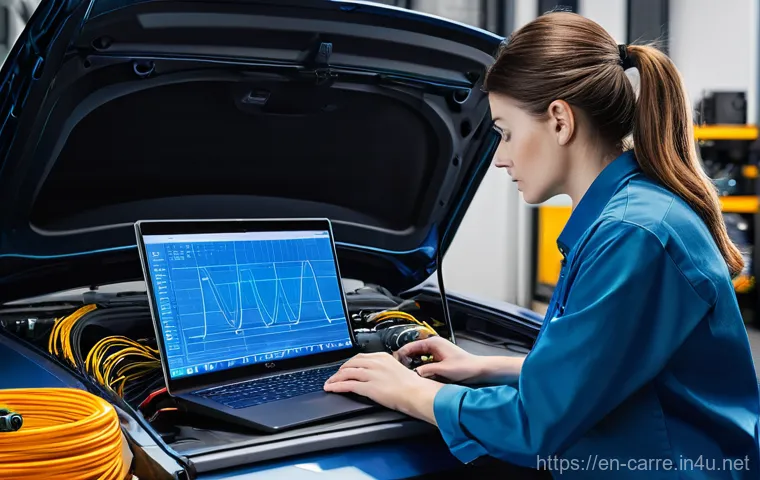
Their primary tools include advanced scan tools, oscilloscopes, multimeters, and specialized software to interact with the vehicle’s electronic control units (ECUs).
It’s a field that demands a deep understanding of computer science, electrical engineering, and complex automotive software. They are constantly learning about new vehicle architectures, communication protocols, and diagnostic routines.
I’ve watched technicians spend hours meticulously tracing wires, analyzing data streams, and cross-referencing schematics, all to find a single, elusive fault in a sea of interconnected systems.
It’s truly mind-boggling how much intelligence is packed into modern vehicles, and these pros are the ones who decode it all for us.
The Software Wizards: Programming Your Ride
Beyond just diagnostics, automotive technicians are increasingly becoming software wizards. Many modern car repairs aren’t about replacing a physical component, but about updating or reprogramming the software that controls that component.
Think about it: your car’s engine, transmission, brakes, and even your infotainment system are all controlled by sophisticated software. Sometimes, a “fix” is as simple as installing a new software update to resolve a bug or improve performance, much like updating your smartphone.
Other times, after replacing a component like a new throttle body or a sensor, it needs to be “calibrated” or “programmed” to communicate correctly with the rest of the vehicle’s systems.
This requires specialized programming tools and a deep understanding of OEM (Original Equipment Manufacturer) procedures. For instance, when I had a sensor replaced in my SUV, the technician spent more time calibrating the new part with the car’s computer than physically installing it.
It’s a testament to how integrated software has become. They also handle critical tasks like key programming, security system integration, and configuring advanced driver-assistance systems (ADAS) after a collision repair, ensuring all safety features function perfectly.
Their work is precise, often requiring meticulous attention to detail and adherence to manufacturer guidelines, transforming them into vital guardians of our vehicle’s digital integrity.
| Aspect | Traditional Mechanic | Automotive Technician |
|---|---|---|
| Primary Focus | Mechanical systems, physical components | Electrical, electronic, and software systems |
| Key Skills | Hands-on repair, fabrication, physical diagnosis | Computer diagnostics, electrical troubleshooting, software programming |
| Common Tools | Wrenches, screwdrivers, engine hoists, manual gauges | Scan tools, oscilloscopes, multimeters, diagnostic software, laptops |
| Typical Repairs | Engine overhauls, brake jobs, suspension work, oil changes | Check engine light diagnosis, sensor replacement, software updates, ADAS calibration |
| Problem Solving | Listening, feeling, visual inspection, physical testing | Interpreting data, reading codes, analyzing waveforms, logical deduction |
Specialized Skills for Our High-Tech Rides
Navigating the Nuances of Electric Vehicles
The advent of electric vehicles (EVs) has added yet another layer of specialization to the automotive service industry. EVs are fundamentally different from their gasoline-powered counterparts, lacking many of the mechanical components we’ve grown accustomed to, like engines, transmissions, and exhaust systems.
Instead, they feature complex battery packs, electric motors, power electronics, and regenerative braking systems. Servicing an EV requires a completely new skill set, especially when it comes to high-voltage systems.
Technicians working on EVs need extensive training in electrical safety, as mishandling high-voltage batteries can be incredibly dangerous. They understand battery management systems (BMS), charging infrastructure, and the unique diagnostic challenges associated with electric powertrains.
From my perspective, working on an EV feels like a fusion of IT and traditional automotive work, but with the added element of managing significant electrical power.
It’s a specialized domain that demands continuous learning, as EV technology itself is still rapidly evolving. You wouldn’t ask a traditional mechanic, no matter how skilled, to dive into a high-voltage battery pack without specific training, just as you wouldn’t ask an EV specialist to rebuild a combustion engine.
Mastering Advanced Driver-Assistance Systems (ADAS)
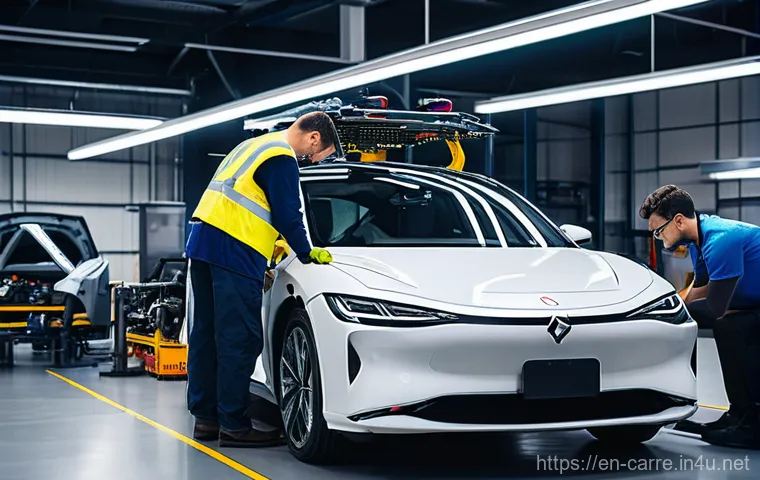
Beyond EVs, the proliferation of Advanced Driver-Assistance Systems (ADAS) like adaptive cruise control, lane-keeping assist, automatic emergency braking, and parking assist has created another highly specialized niche.
These systems rely on an intricate network of sensors—radars, cameras, ultrasonic sensors—all feeding data to a central computer to help you drive safer and more comfortably.
The challenge? If your car has been in a fender bender, or even had a windshield replaced, these sensors often need meticulous recalibration. A slight misalignment can render an entire safety system inoperable or, worse, make it dangerously inaccurate.
This is where specialized ADAS technicians come in. They use highly precise calibration tools, laser alignment systems, and specific software to ensure every sensor is perfectly aimed and communicating correctly.
I’ve seen firsthand how crucial this is; a vehicle leaving a shop after a seemingly minor repair, only for its ADAS system to malfunction because it wasn’t properly recalibrated, could lead to serious consequences.
It’s not just about replacing a bumper anymore; it’s about restoring the digital eyes and ears of your vehicle, demanding a blend of precision mechanics and cutting-edge software expertise.
Why Knowing the Difference Empowers You
Making Informed Decisions for Your Vehicle’s Health
Understanding the distinction between a mechanic and a technician isn’t just an academic exercise; it’s genuinely empowering when it comes to maintaining your own vehicle.
Imagine your check engine light comes on. If you automatically head to a shop that specializes solely in mechanical repairs, you might end up with a hefty bill and the issue still unresolved, because the root cause was an electronic sensor or a software glitch they weren’t equipped to diagnose.
Conversely, if your car is making a strange grinding noise, a specialist in computer diagnostics might spend valuable time hooking up scan tools when a simple visual inspection by a skilled mechanic could pinpoint a worn bearing in minutes.
Knowing what kind of problem you’re likely facing allows you to choose the right professional from the outset. This saves you not only money but also precious time and frustration.
From my own experience, getting a second opinion or specifically asking about a shop’s diagnostic capabilities can make all the difference, ensuring your car gets the precise care it needs without unnecessary steps.
It’s about being an educated consumer in an increasingly complex automotive landscape.
Saving Time and Money with the Right Expert
Beyond just informed decisions, choosing the correct expert can significantly impact your wallet and your schedule. Picture this: your car is sputtering, and you suspect it’s a spark plug issue.
A skilled mechanic can quickly diagnose and replace them. But if you take it to a highly specialized diagnostic center, they might charge you a premium diagnostic fee before even touching a wrench, only to tell you what a general mechanic would have known by simply listening to the engine.
On the flip side, if your car’s infotainment system is completely frozen, taking it to a traditional mechanic who only works on engines and brakes might result in them scratching their head, or worse, trying a “fix” that doesn’t address the software problem, costing you time and still requiring another visit elsewhere.
By understanding who does what, you can streamline the repair process. You’re not paying for a high-tech diagnostic rig when all you need is a tire rotation, and you’re not wasting time at a general repair shop when your issue clearly requires advanced electronic troubleshooting.
It’s all about efficiency and getting the best value for your automotive service dollar.
What’s Next? The Evolving Landscape of Vehicle Care
Continuous Learning: The Lifelong Journey of Automotive Pros
One thing is crystal clear: the automotive industry never stands still. For both mechanics and technicians, continuous learning isn’t just an option; it’s an absolute necessity.
The pace of innovation, especially with the rapid adoption of electric vehicles, autonomous driving features, and sophisticated connectivity options, means that yesterday’s expertise might be obsolete tomorrow.
Professional development, certifications, and specialized training programs are integral to staying relevant and effective. I’ve spoken with countless professionals in the field, and they all echo the same sentiment: if you’re not learning, you’re falling behind.
This isn’t just about reading manuals; it involves hands-on courses, manufacturer-specific training, and staying abreast of the latest diagnostic tools and software updates.
It’s a lifelong journey of skill acquisition, ensuring they can tackle whatever new challenges come rolling into their bays. This commitment to ongoing education is what truly defines the best in the business, assuring us, the car owners, that our vehicles are in capable and up-to-date hands.
The Synergy of Mechanical and Technical Expertise
While we’ve explored the differences, it’s vital to recognize that the future of automotive care lies in the synergy between mechanical and technical expertise.
Modern vehicles are complex ecosystems where mechanical, electrical, and software components are inextricably linked. Often, a mechanical issue might trigger an electronic fault code, or an electrical problem could manifest as a perceived mechanical failure.
The most effective automotive service centers are those where mechanics and technicians collaborate, leveraging each other’s specialized knowledge to provide comprehensive solutions.
Imagine a scenario where a technician diagnoses a software issue that, upon closer inspection, is actually being caused by a worn mechanical sensor. Or a mechanic identifying a physical rattling that’s ultimately traced back to an electronic module not properly mounted.
These professionals aren’t just working in parallel; they’re increasingly working together, often in the same bay, bouncing ideas off each other and combining their unique skill sets to get to the root of a problem.
This integrated approach is, in my opinion, the gold standard for navigating the complexities of today’s and tomorrow’s vehicles, ensuring we get the most accurate and efficient repairs possible.
Closing Thoughts
This journey through the evolving automotive landscape has been quite an eye-opener, even for me, someone who loves digging into these topics. It’s clear that our cars are becoming more than just modes of transport; they’re intricate systems blending traditional mechanics with cutting-edge digital intelligence. What I’ve truly come to appreciate is how crucial it is for us, as car owners, to stay informed. Understanding the nuances between a traditional mechanic and a modern automotive technician isn’t just about technical jargon; it’s about empowering ourselves to make the smartest decisions for our beloved rides and ensuring they get the precise care they deserve. This knowledge ultimately leads to a smoother, safer, and more economical driving experience, giving us peace of mind on every journey.
Useful Information to Know
1. When you’re faced with a car problem, take a moment to consider its nature. Is it a strange noise, a physical leak, or something you can feel with your hands? That often points towards a mechanical issue, best handled by a seasoned mechanic. However, if it’s an illuminated dashboard warning light, an infotainment glitch, or an issue with your advanced driver-assistance systems, you’re likely looking at an electronic or software problem, meaning an automotive technician is your best bet. Knowing this initial distinction can save you a diagnostic fee at the wrong shop, and get your car on the right path to recovery much faster. I once spent an entire afternoon at a general repair shop only to be told they couldn’t diagnose my persistent check engine light, simply because they lacked the specialized software and training for modern vehicle ECUs.
2. Don’t be shy about asking shops about their specializations before you even bring your car in. Many reputable repair facilities now clearly advertise their expertise – whether they’re champions of classic car restoration, certified EV specialists, or equipped with the latest ADAS calibration tools. A quick phone call or a glance at their website can confirm if they have the right equipment and the right professionals for your specific issue. In my experience, transparency from a repair shop regarding their capabilities is a huge green flag, indicating they value your time and want to ensure you get the most appropriate service. It’s like going to a heart specialist for a heart problem instead of a general practitioner for an emergency – you want the expert who truly understands your particular ailment, ensuring focused and effective care.
3. For us car owners, recognizing the commitment to continuous learning in automotive professionals is incredibly important. The best mechanics and technicians are lifelong students, constantly updating their skills and certifications to keep pace with rapid technological advancements. When you’re choosing a service center, don’t hesitate to ask about their technicians’ ongoing training, especially if you drive a newer vehicle or an EV. A shop that invests in its staff’s education is a shop that’s equipped to handle the complexities of your modern ride. I’ve found that shops proudly displaying their latest certifications often provide superior, more accurate service, as their teams are truly at the forefront of automotive innovation and diagnostic techniques, which translates directly to better care for your vehicle.
4. Never underestimate the power of preventative maintenance. While it might seem like an extra cost upfront, adhering to your vehicle’s recommended service schedule can save you thousands in major repairs down the line. Regular oil changes, tire rotations, fluid checks, and timely filter replacements don’t just keep your car running smoothly; they also allow mechanics and technicians to spot potential issues before they escalate into costly breakdowns. Think of it as a regular health check-up for your car. I’ve personally seen how delaying a simple fluid flush turned into a much more expensive transmission repair for a friend. A little proactive care goes a long way in ensuring the longevity and reliability of your vehicle, reducing unexpected stress and expenses over its lifespan.
5. That dreaded ‘Check Engine’ light can be alarming, but it’s crucial not to ignore it. While sometimes it might be something as simple as a loose gas cap, it can also signal a more serious problem with your emissions system, engine, or other critical components. Instead of guessing, head to a reputable automotive technician who can connect your car to a diagnostic scan tool. This tool will pull specific error codes that provide clues to the underlying issue. Many auto parts stores offer free code readings, which can give you a starting point, but remember, interpreting those codes and diagnosing the root cause requires the expertise of a professional technician. Ignoring the light can lead to decreased fuel efficiency, increased emissions, and potentially irreversible damage to expensive components that could have been prevented.
Key Takeaways
The automotive world is undergoing a monumental shift, moving rapidly from purely mechanical systems to highly integrated mechanical, electrical, and software-driven vehicles. This transformation means that the roles of the traditional mechanic and the modern automotive technician have diverged significantly, each requiring distinct skill sets and tools. Mechanics excel in the tangible, physical repairs like engine overhauls and brake jobs, while technicians are the diagnostic detectives and software wizards, tackling complex electronic issues, sensor calibrations, and system reprogramming. The rise of electric vehicles and sophisticated Advanced Driver-Assistance Systems further highlights this specialization, demanding unique expertise in high-voltage safety and precise sensor recalibration. For us, the car owners, understanding these differences is truly empowering; it enables us to make informed decisions, ensuring our vehicles receive the right care from the right expert, ultimately saving us both time and money. The future of vehicle maintenance will undoubtedly see even greater synergy between these specialized roles, driven by continuous learning and collaborative problem-solving to navigate the ever-evolving complexities of our high-tech rides, ensuring our journeys remain smooth and safe.
Frequently Asked Questions (FAQ) 📖
Q: So, what’s the real scoop? Is there actually a big difference between a “mechanic” and a “technician” when it comes to fixing our cars today?
A: Oh, absolutely! And this is a question I hear all the time. From my experience, and believe me, I’ve spent my fair share of time in waiting rooms, the roles have really evolved, especially with how smart our cars have gotten.
Think of it this way: a “mechanic” often brings that incredible hands-on expertise, the kind you rely on for things like oil changes, brake jobs, or maybe even an engine overhaul – the stuff where you really get your hands dirty with wrenches and traditional tools.
They’re amazing at the mechanical aspects. Now, a “technician” – especially today’s automotive technician – is almost like a car doctor specializing in computers and complex systems.
They’re the ones with the fancy diagnostic tools, plugging into your car’s brain to figure out why that check engine light is on, dealing with intricate electrical issues, or troubleshooting the software glitches in your advanced driver-assistance systems (ADAS) or even an electric vehicle’s power management.
I personally found that when my car started acting weird with its infotainment system, it was a technician, not a traditional mechanic, who could truly pinpoint the issue.
It’s less about turning a wrench and more about understanding lines of code and sensor data.
Q: My classic car guy is brilliant, but he looked totally lost when I mentioned my new EV’s weird charging issue. Why can’t a good, experienced mechanic handle all these new high-tech problems?
A: That’s a totally valid point, and honestly, it’s a feeling many of us can relate to! I remember bringing my hybrid in for what I thought was a simple fix, and even my trusted mechanic, who’d been servicing my family’s cars for decades, admitted it was beyond his current expertise.
The truth is, the automotive world is just exploding with new technology at such a rapid pace. Traditional mechanics, while incredibly skilled in their domain, might not have the specialized training or the extremely expensive diagnostic equipment needed for electric vehicles, complex ADAS, or intricate computer networks.
EVs, for instance, deal with high-voltage systems and entirely different drivetrains that require specialized safety protocols and diagnostic procedures.
It’s like asking a brilliant general practitioner to perform brain surgery – they’re both doctors, but the specialization is key. It’s not a slight against their experience; it’s simply a recognition that the industry has created entirely new fields of expertise.
I’ve learned that for these cutting-edge issues, seeking out a technician specifically trained and certified in these newer technologies often saves a lot of headache and ensures the job gets done right and safely.
Q: So, if my car has a problem, how do I even know if I need a mechanic or one of these new “technicians”? It feels like such a guessing game sometimes!
A: Oh, I totally get that! It can feel like a bit of a maze trying to figure out who to call, especially when you’re already stressed about your car acting up.
My rule of thumb, after a few too many wrong turns myself, is to start by thinking about the symptom. Is it a physical, tangible issue? Like a squealing brake, a strange knocking sound from the engine, or something leaking on the driveway?
That often points toward a traditional mechanic who specializes in the mechanical guts of your car. But if it’s something electrical, a warning light on the dash (especially if it’s not immediately clear what it means), an infotainment glitch, issues with your cruise control or lane assist, or anything related to how your car’s “brain” is functioning, then you’re almost certainly looking for a technician.
If you’re ever in doubt, the best first step is always to describe the problem to the service advisor when you call. They’re usually pretty good at directing you to the right specialist.
And trust me, it’s always better to get it right the first time to avoid wasting your time and money, and to make sure your ride stays safe and sound on the road!